Problematic language and ideas for better communication in the context of UK land management
/Harriet and Rob Fraser reflect on hosting an interactive session at the inaugural RLAS Symposium held in Edinburgh 10-11 February 2026
If landscape-scale change requires collaboration, transmission of messages across disciplines, and practical courses of action, language matters. But communication is not always straightforward. There are words and phrases that mean different things to different people, which can lead to mixed messages or misunderstandings. And it’s not only the language that’s used - it’s also tone and context. So what can be done to help language work better for us all? This matters not just in spoken conversations, but in reports, newsletters, blogs, policy documents and social media posts.
At this year’s RLAS symposium in Edinburgh, we ran an interactive session to get people thinking about language, communication and contexts. What works? What doesn’t? What opens up conversation and what can close it down?
Our work has focused on land, practices of land management, and issues of land use for more than 15 years. We’ve spent time with and interviewed hundreds of people from many different specialist areas. We have seen how language and tone of communication matter, not just for clarity of information but also in forming and maintaining respectful relationships that acknowledge cultural differences, sectoral nuances, and a range of specialist knowledges.
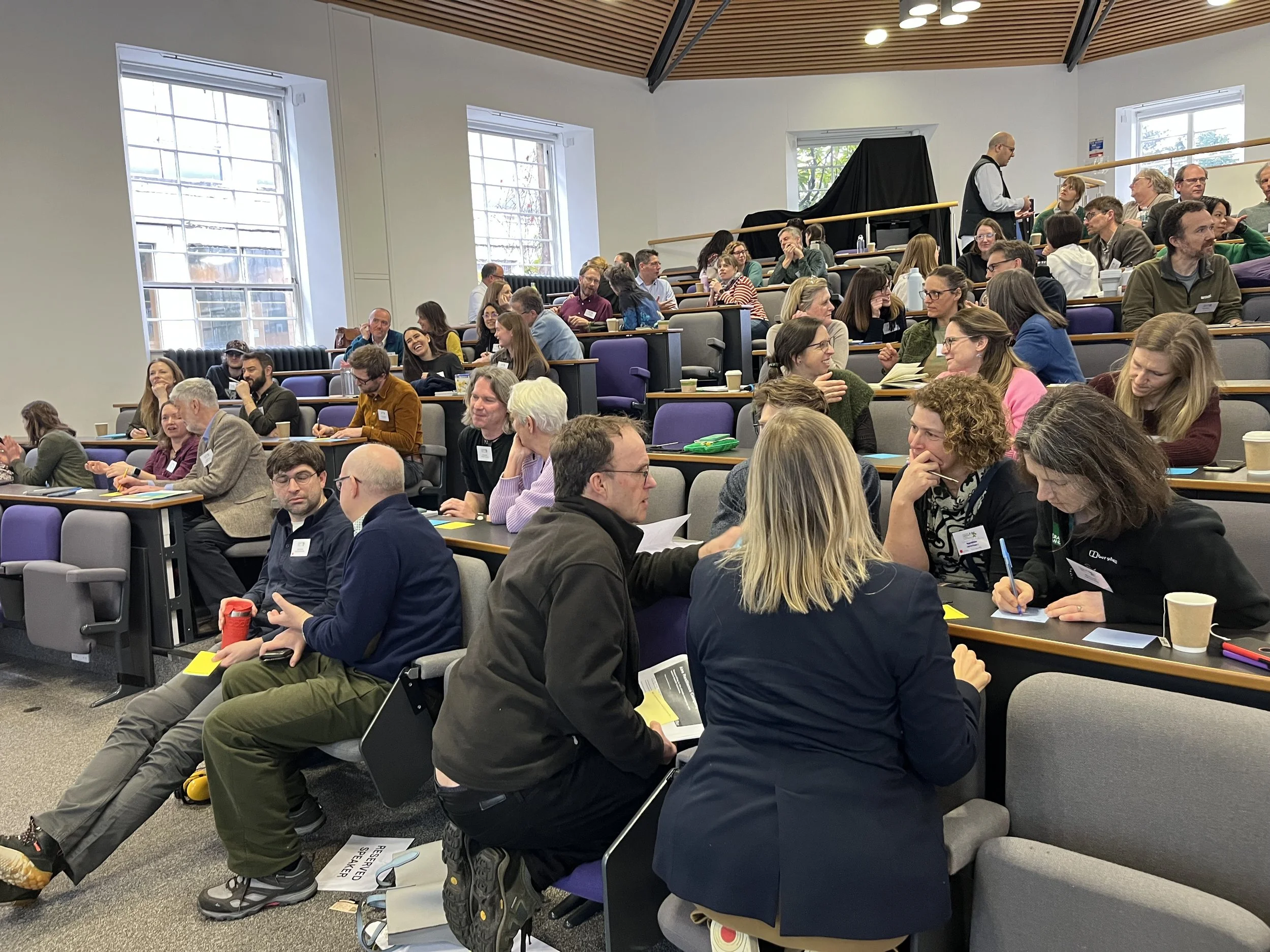
We’re currently working with the Land Use for Net Zero, Nature and People (LUNZ) Hub, a UKRI-funded consortium of 34 organisations and more than 50 partners from different disciplines, all engaged with the challenges of finding pathways to enable transitions in land use. As part of this, we’ve been exploring problematic language with other members of the team. The session at RLAS built on learning so far (there’s an evolving ‘glossary’ of problematic terms on the LUNZ Hub website) and, crucially, moved the conversation on from problems to solutions.
It’s important to note that identifying problems is not about laying blame with any group or individual; communication is two-way, and how we each listen - and hear - what others say is as significant as the language we choose to use. Equally important is a diversity of language. There is no virtue in homogenisation, but the hope is that attention to communication could go a long way in smoothing the relationships and collaborative actions that are essential for changes to take place, locally and at larger scales, with fairness and justice.
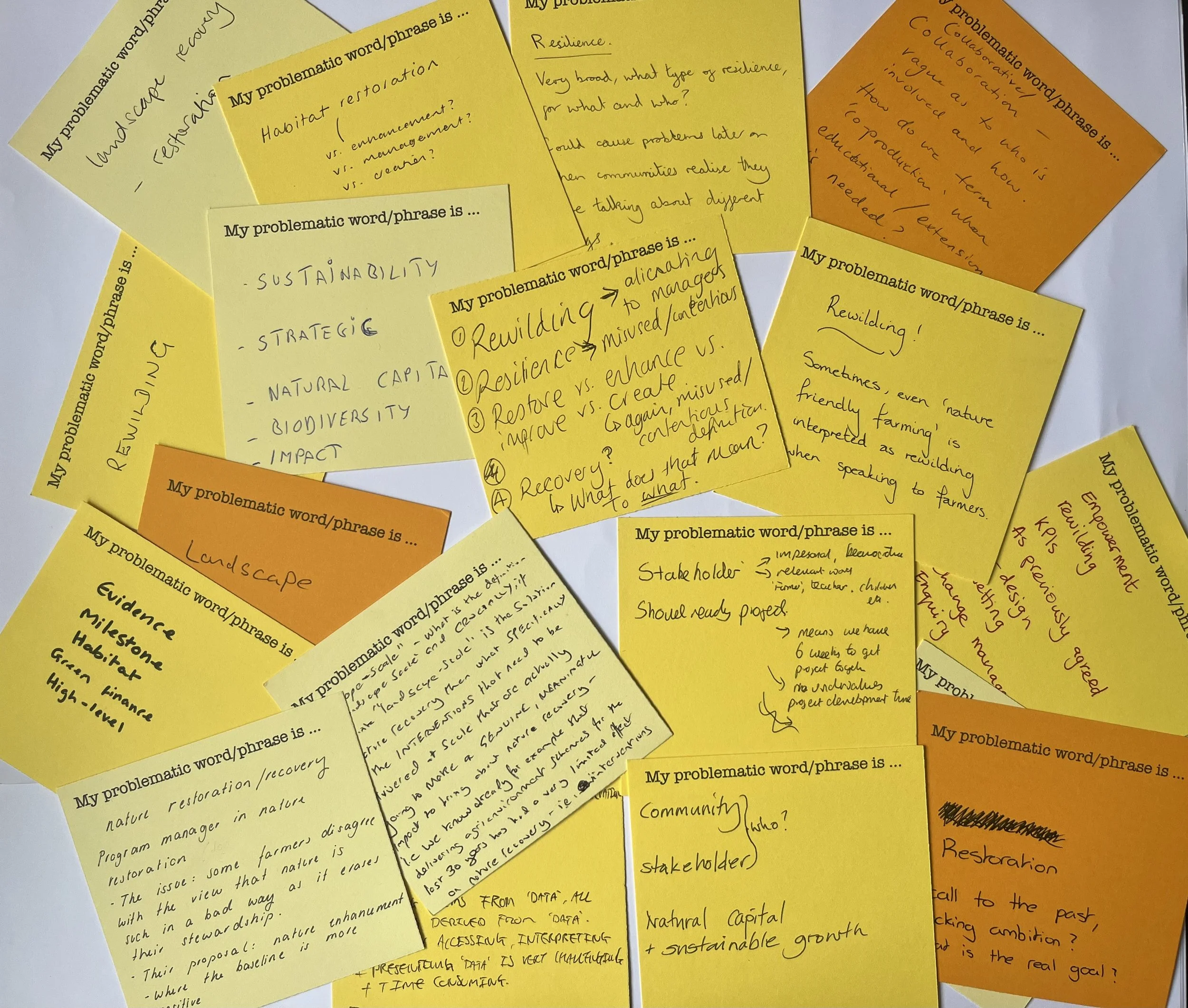
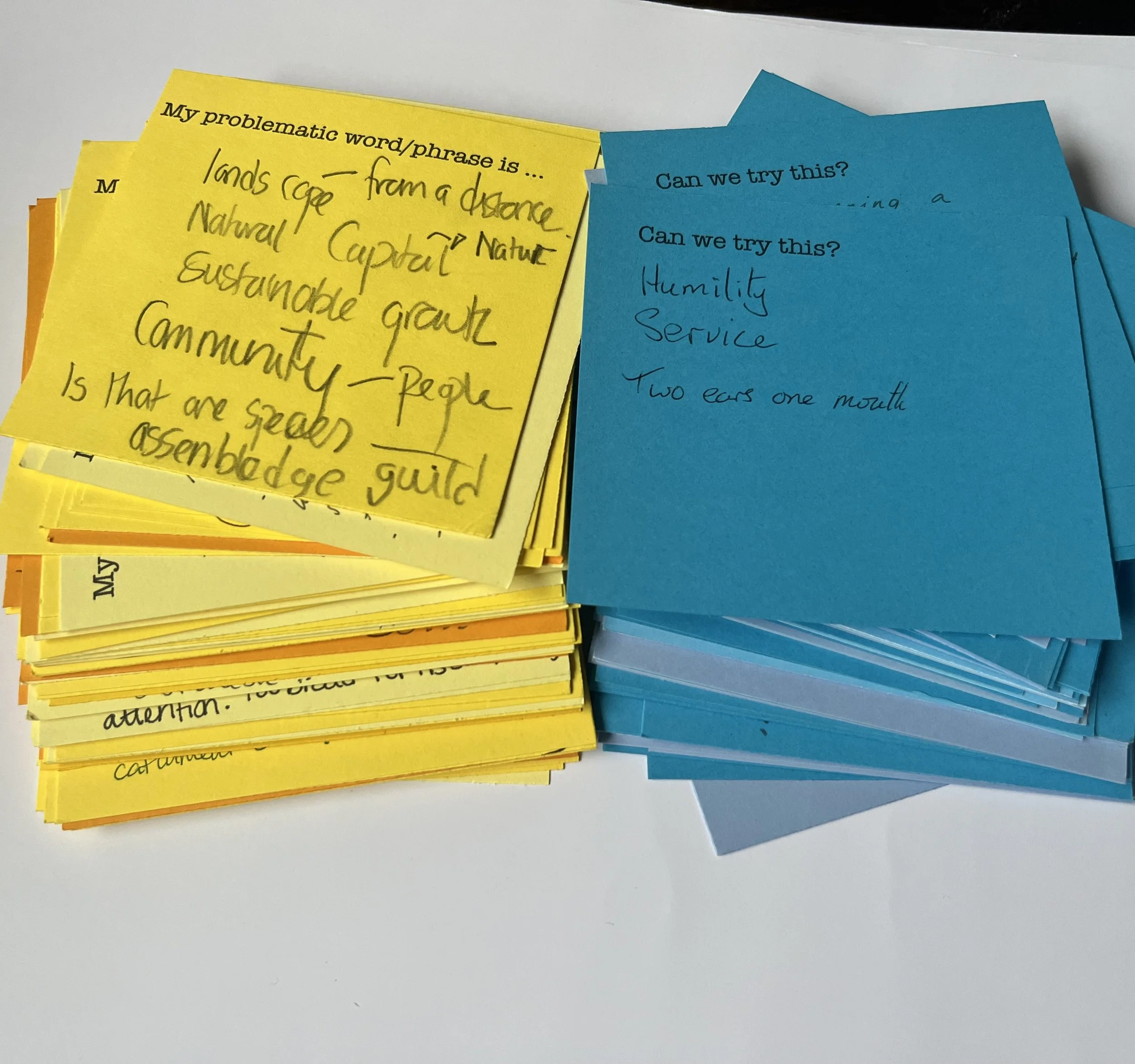
In the first part of the session, participants shared terms and phrases that they find difficult. There were plenty of these! A few that were shared in the discussion included:
· tradition (Whose tradition? And just because something is traditional, does it mean it shouldn’t change?)
· natural capital
· stakeholder
· soil health
· impact
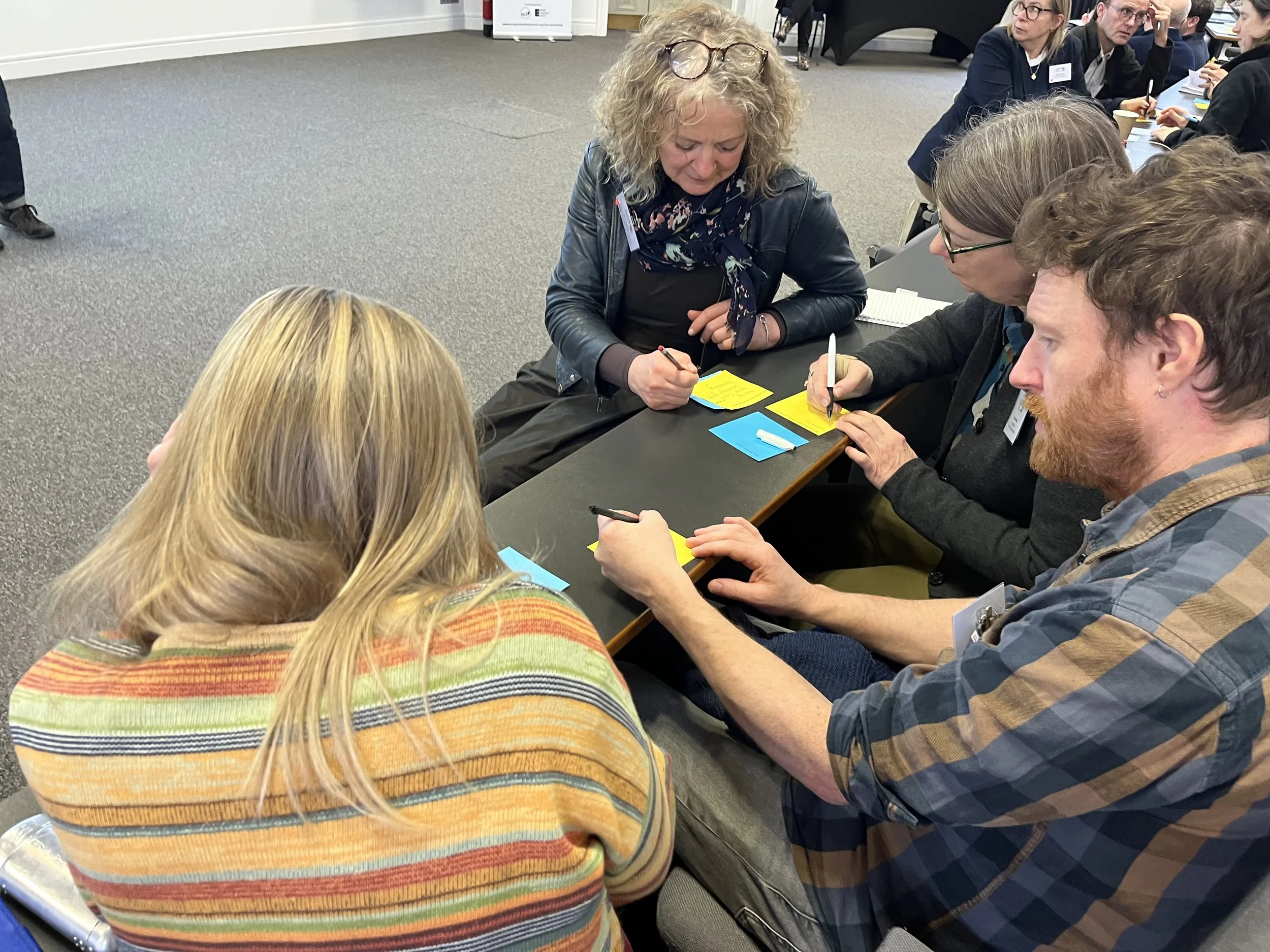
After some frank and open discussions about problems, participants gathered in small groups to discuss what might help. So many words in common usage can both serve an important function, and present problems, so there was a lot of animated conversation. The responses show consistency, which may not be that surprising given the make-up of the participants. Even so, there is a rich collection and some clear themes emerged.
Across all 100 or so responses, three messages dominate:
Slow down.
Listen first.
Define together.
Problematic language is rarely just about words. It is about:
Who defines them
When they are introduced
Whether people feel heard before a discussion or project begins
Tone of speech or of document/presentation
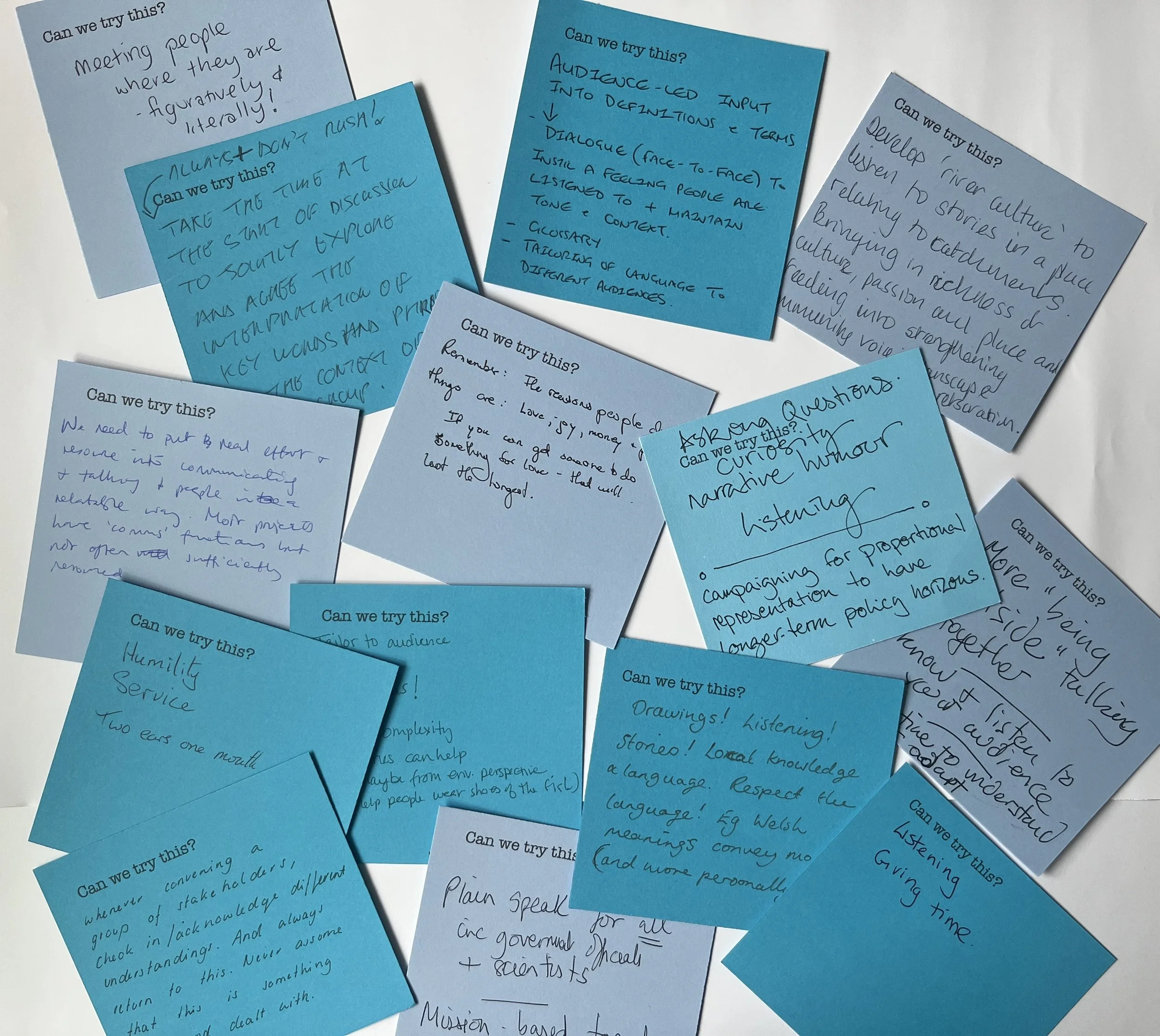
Rather than asking for new terminology as a quick-fix, there’s an appetite for:
Relational shifts (listening, humility, curiosity)
Process shifts (slow down, define together, revisit meanings)
Power shifts (reduce expert dominance, elevate local knowledge, but include both)
Communication shifts (plain language, storytelling, specificity)
Is there time?
Taking time is vital. That may seem tricky amid a sense of urgency for change, but five minutes at the start of a meeting, for instance, could be enough to lay out some key phrases and appreciate the range of perspectives among people in a group, or any key problems to avoid. An introductory session could also be used to check definitions of key terms (e.g. rewilding, biodiversity, resilience and net zero) – and maybe some words or phrases to avoid from the outset. Checking in again mid-project to discuss terminology can also be useful.
What’s relatable?
Sometimes, moving from broad-brush or abstract terms to more tangible references could make a huge difference. Instead of ‘nature recovery’, ‘ecosystem services’ or ‘transformational change’ for instance, could the discussion turn to curlew returning, hedgerows thickening, fields becoming less waterlogged, crops doing well or farms staying financially viable? Tangible references can not only aid discussions; they may reduce any resistance connected with ideological differences or historical tensions, while also being part of sharing and learning from practice and place-based experiences.
Many people stressed the importance of ‘Plain English’ to make things understandable, without losing crucial detail. There were suggestions to avoid acronyms (or explain them as you go, as a matter of habit) and explain sector/specialist terms so that they enrich a discussion, rather than make it exclusive. Culturally-specific language is important too – for instance, using Welsh where appropriate, and drawing on local dialect and place names can help with inclusivity, and relevance to particular places and communities.
Discussions did move away from words and phrases to funding: one of the keys to enabling change. There were calls for greater resources for communications, storytelling and convening meetings, and longer-term funding cycles because, crucially, relationship building cannot be rushed. Can there be more time and money for face-to-face meetings and in-person dialogue?
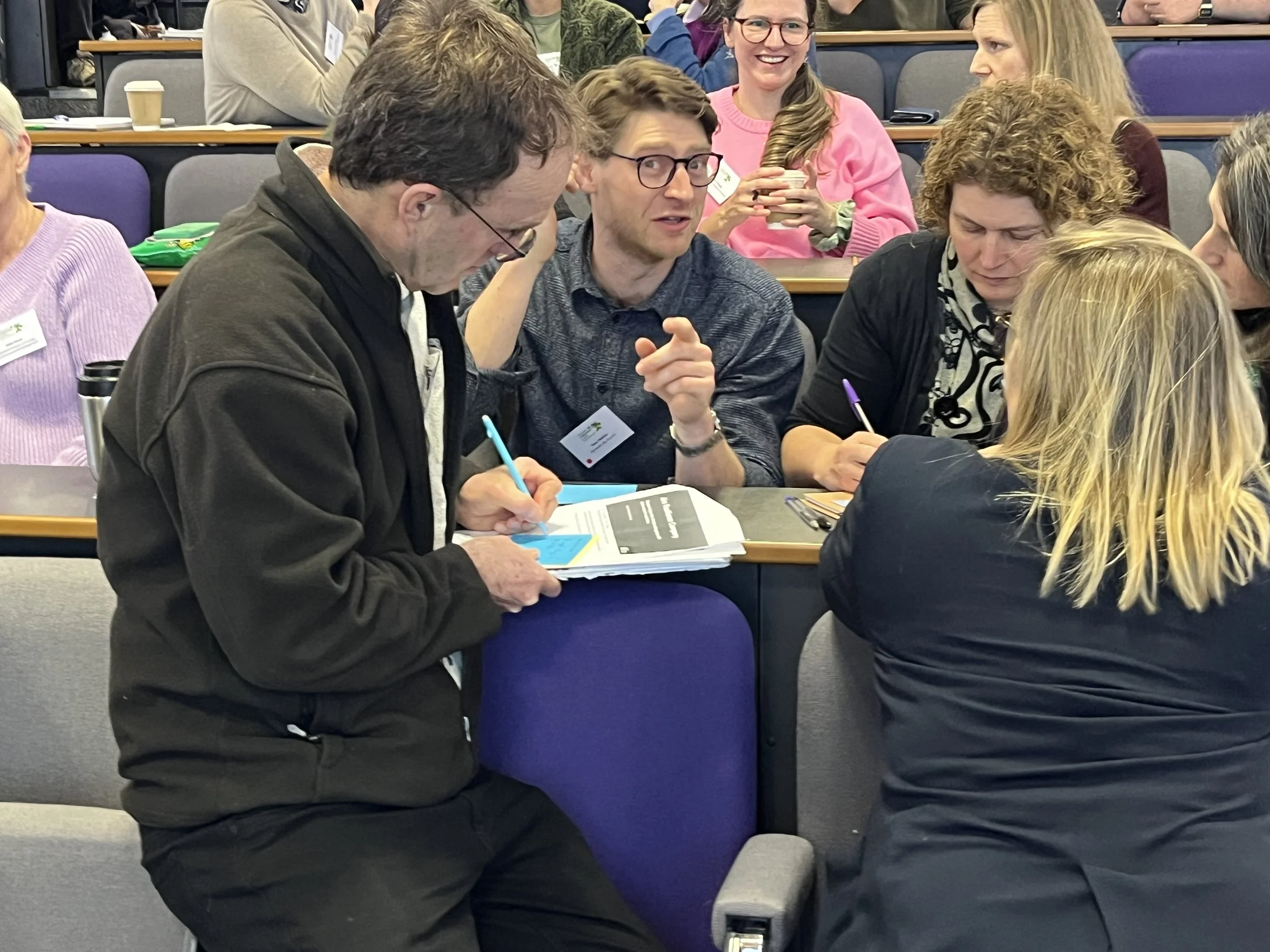
Unsurprisingly, the use of different media was mentioned. Visual narratives, film, poetry and other artistic approaches can make discussions both smoother and deeper. The range of presentations at the symposium demonstrated this: communication is never only about words. Artistic media or activities can help to bring in all the senses and allow people to appreciate another’s perspective or consider a problem in ways that aren’t limited to words: including emotion, visual and landscape context, and measured data.
Next steps
Insights from the RLAS symposium will be added to the mix: the ‘language matters’ work is continuing, We and others in the LUNZ Hub team are running short sessions and ensuring attention to communication is given time, and we plan to collate a language resource in the coming year.
More than one person at the RLAS symposium reflected to us that they noticed a shift after the Language Matters session: presenters in subsequent sessions paused and openly considered the terms they were using.
Above all: kindness
It is not a simple task to distil the range of responses and the richness and depth of the conversations; and even doing so risks squeezing out something - emotions? Ripples of discussion after the session, and then a long process of looking through the cards, showed that above all, people want to be kind: to one another, to the land, and to all the land’s inhabitants and future generations. It is a strong impulse that showed up in the shared interest to think more deeply than usual about words in common use.
Words matter: they define the information, meanings and relationships that are carried forwards. As we all work together to shape relationships and systems that affect the land in our care, and given that change is needed on an unprecedented scale, maybe now is the perfect time to rethink what it is we say, hear, and share through words, phrases and tones of communication.
Do get in touch if you want to share any thoughts about your own experiences of problematic language, and effective ways to overcome difficulties.
Harriet Fraser and Rob Fraser are based in Cumbria and work together in their collaborative arts practice somewhere nowhere. Visit the LUNZ Hub for more.
