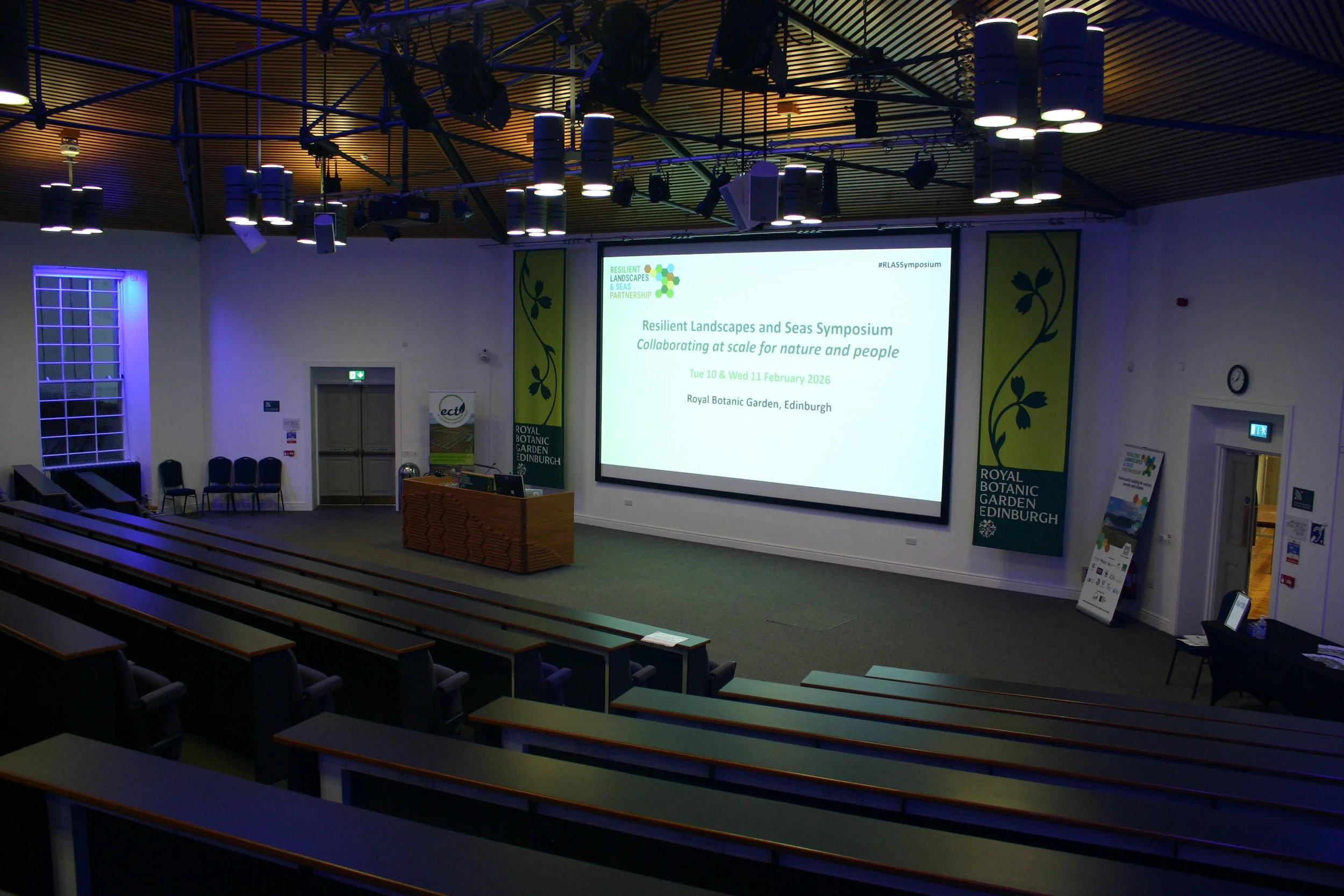
Almost 150 delegates representing 81 different organisations in the environmental sector gathered in Edinburgh on 10-11 February 2026 for the inaugural symposium of the newly-formed Resilient Landscapes and Seas (RLAS) partnership. Officially launched in October 2025, the RLAS partnership provides connectivity between landscape-scale projects over 500 hectares in size, and over-arching support to help deliver benefits for nature, people and climate.

The symposium was titled Collaborating at Scale for Nature and People and held in the Science Building of the Royal Botanic Gardens, Edinburgh. Organised by the ECT in association with the British Ecological Society (BES), the symposium continued the community building work begun at earlier events held in 2023 and 2024.
The symposium featured six themed sessions with 27 speakers, an interactive session on how language matters in the landscape-scale transformation space, and a poster session featuring 17 poster presenters. The full programme is available, and what follows is a very brief and early summary of the proceedings.
Clive Mitchell welcomed everyone to the symposium in his role as Head of Terrestrial Science at NatureScot, reminding us all about the pressing issue of climate change, tipping points and the interdependency of climate, nature, food and health. Emphasising the need to work at scale, he advocated for a transformation in the way we think about conservation.
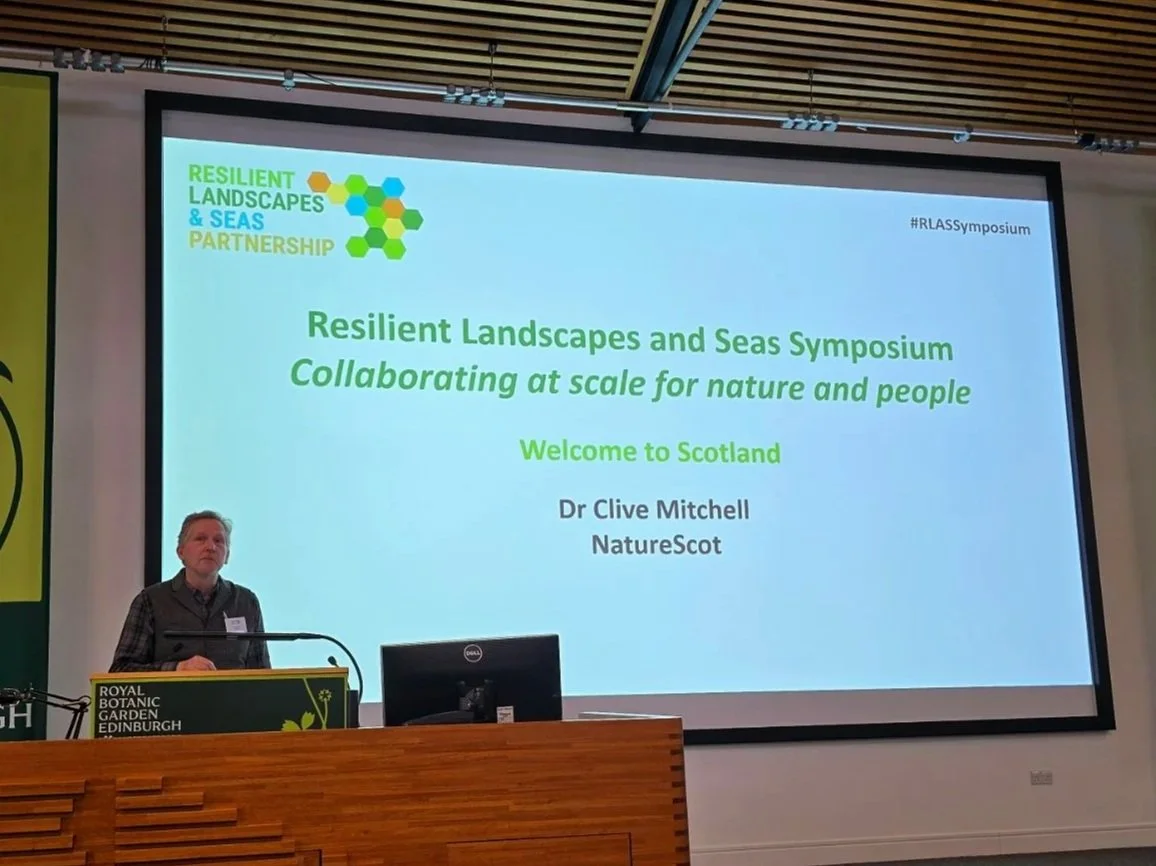
Clive Mitchell, NatureScot
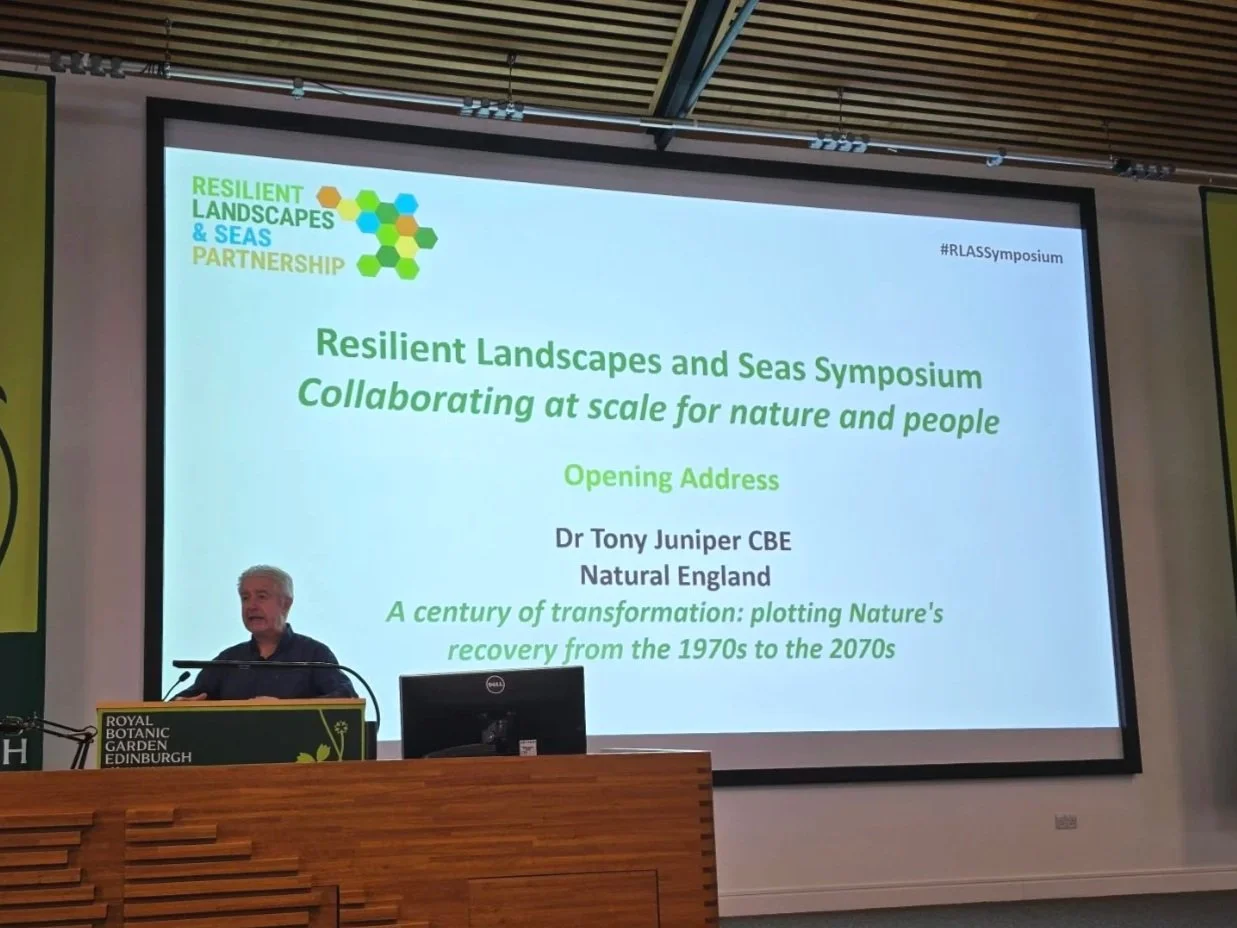
Prof Tony Juniper OBE, Natural England
The opening keynote address was delivered by Tony Juniper, Chair of Natural England, who sought to convey a century of landscape transformation for all, charting nature’s recovery from the 1970s to the present day and projecting on to where we might be by the 2070s.
Subsequent sessions and talks covered a range of case studies in landscape restoration/transformation, addressing the need to work at scale, the importance of partnerships and community engagement, how we use language, and green finance. The following are some of the key headlines that emerged:
· Working at scale matters for resilience.
· A better evidence base is needed through partnership between science and practice.
· Ecologist skill sets are not currently well-matched to some of the emerging ecological practice needs at the landscape-scale.
· Coordinating collaborative actions amongst landowners and especially with farmers is crucial to success.
· Creating climate-resilient landscapes requires realism and pragmatism, rather than dogmatism.
· The environment needs to be embedded in business practice.
· Green finance structures are hampered by “disconnected allies” and are slow to mature to the integrated levels of finance that are required for landscape-scale transformation.
· Land ownership partnerships can aid restoration efforts, but they require many ecologists with different specialisms; expertise across multiple sectors is needed.
· Successful partnership requires transparency, openness and a dedication to ecological truth.
· The language we use to communicate across disciplines and stakeholders is more important than we perhaps realise in achieving successful outcomes in landscape-scale transformation.
· Frameworks for nature recovery in farmed landscapes require a deep understanding of farmers’ views of nature versus food production.
· Catchment-scale restorations that cross jurisdictions may sometimes require independent leadership and can benefit from agreements on joint funding and delivery.
· Progress can be slow and hard to measure in landscape-scale partnerships, but trust is crucial to move far, rather than fast.
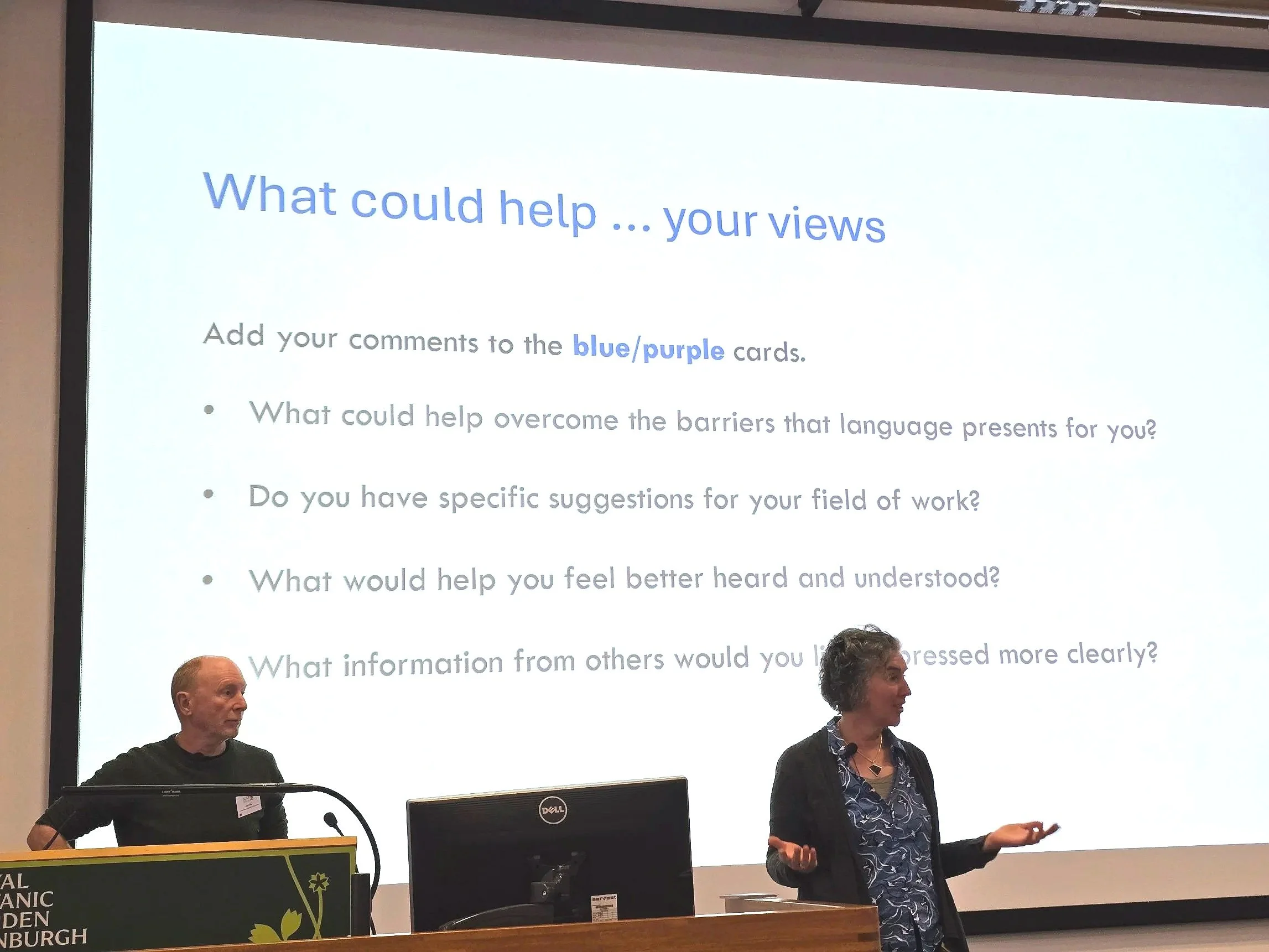
Harriet and Rob Fraser from somewhere nowhere arts practice presented the interactive session
· Understanding of an ecological system is not enough on its own to get us where we want to be; power sharing between partners leads to wider decisions, contrasting “power with” versus “power over”.
· Engagement with communities is essential to progress in landscape-scale restoration and can be mediated to a high degree through working with schools; however, engagement in marine landscapes can be very challenging.
· Landscape Enterprise Networks (LENs) are a type of collaborative marketplace enabling landowners to make successful proposal to multiple funders who may seek a range of different outcomes. As a unique co-funding mechanism, this collaborative funding approach reduces costs and maximise outcomes.
· Public money for landscape-scale restoration can unlock private funding from business, especially where “resilience” is being sold as a risk reduction, such as through Natural Flood Management (NFM).
· The challenges of climate change may require new institutions and new forms of contract that do not put risk on to others.
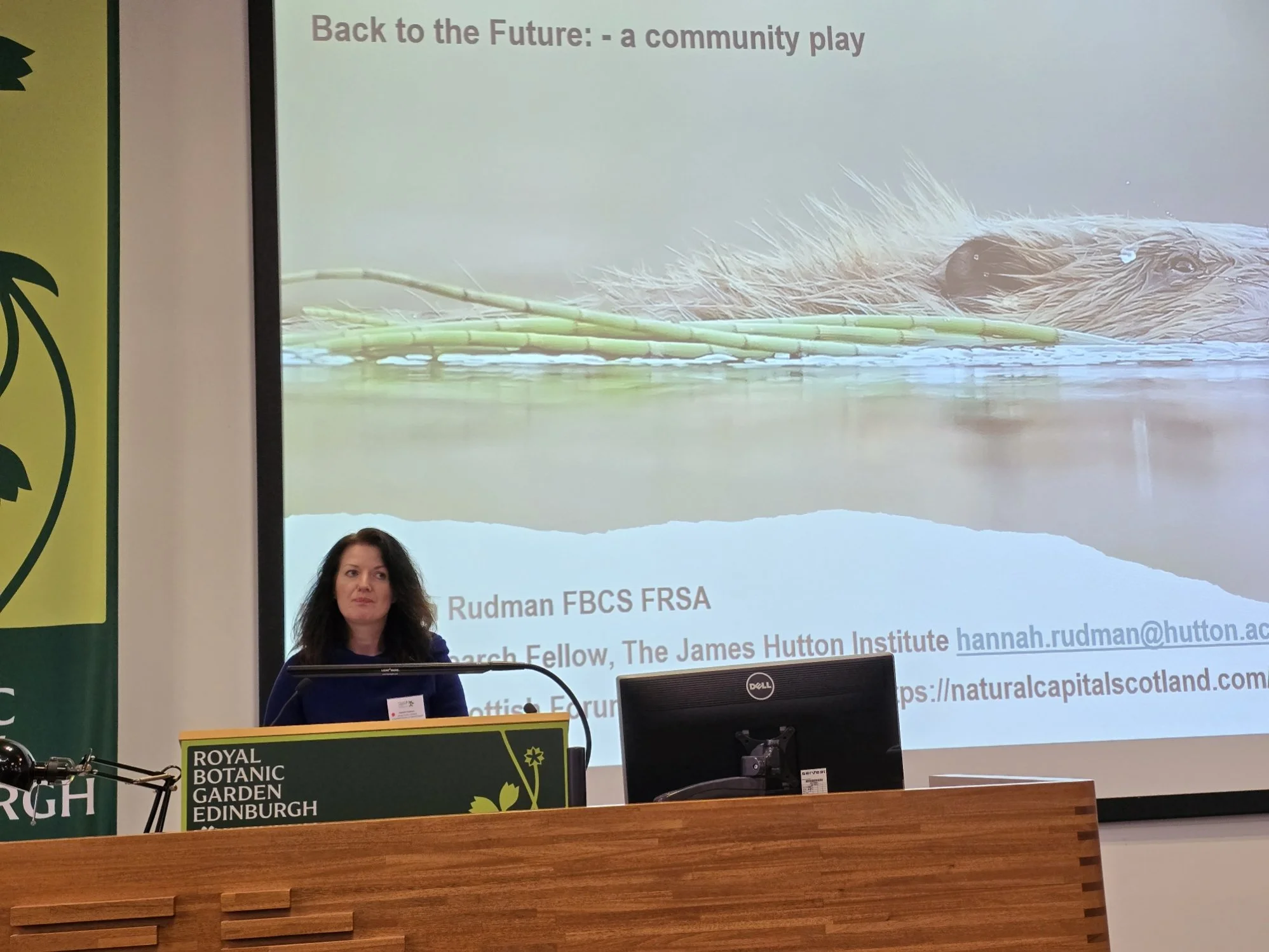
Dr Hannah Rudman, James Hutton Institute & The Scottish Forum on Natural Capital
The symposium closed with a visionary presentation from Hannah Rudman of the James Hutton Institute and Scottish Forum on Natural Capital. Presenting a vision of a 2050 utopian landscape working for all, she worked backwards to track the journey from the “bad old days” of 2026 and cited the Scottish Forum on Natural Capital as a possible milestone in that journey. The Forum is an example of a new mechanism that can generate seed funding for landscape transformation projects and deliver a return on investment to businesses and landowners around the reduction of risk.
[A full written report of the detailed proceedings will be published by ECT/BES in the near future]
