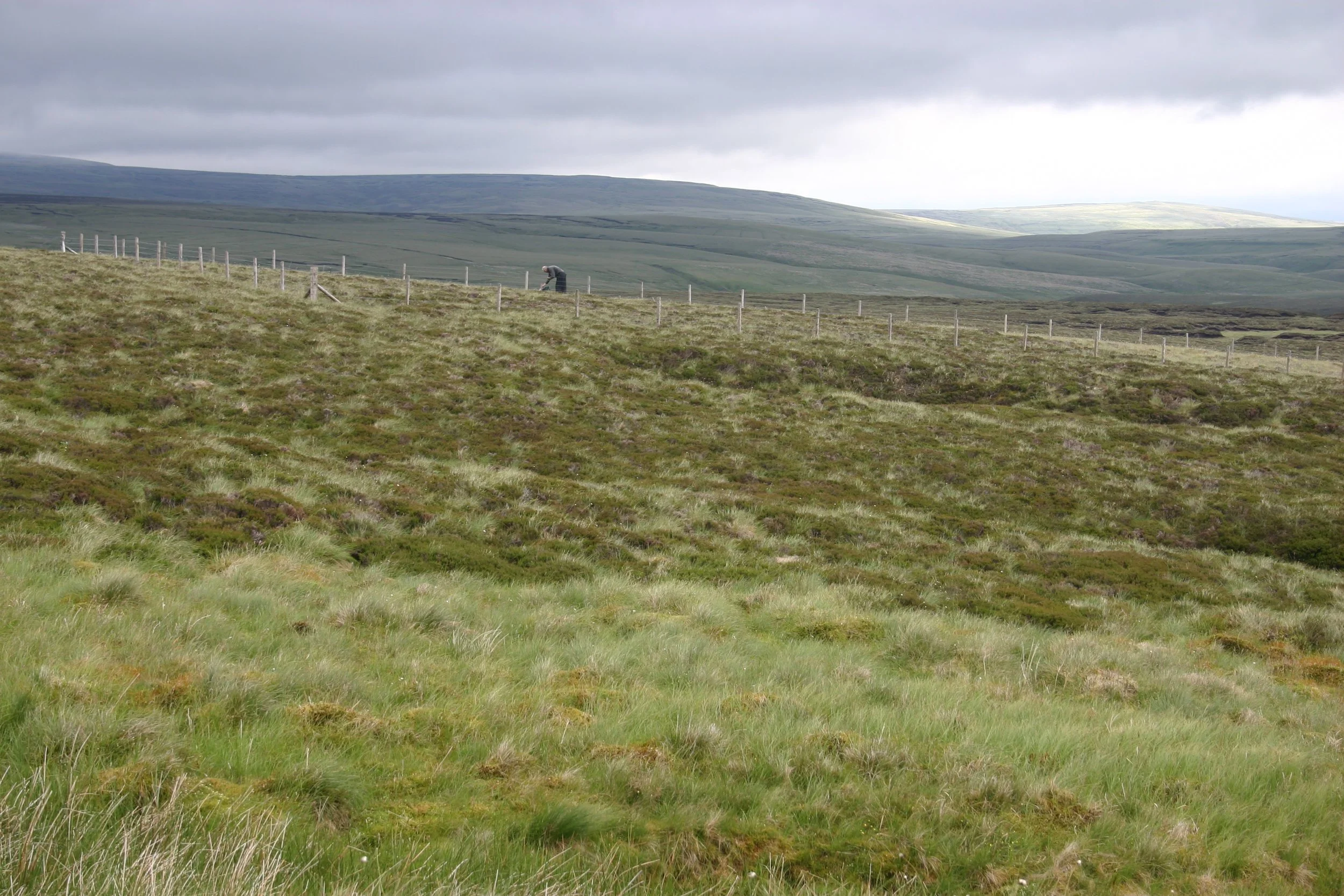
Now that the evidence and legislation mean that Moor House Hard Hill will no longer be burnt, the question now is what will happen next for this site? Adam Rodgers from Natural England addresses this question.
Moor House was among the first National Nature Reserves designated in England in 1952. Over the last 70+ years it has hosted an extraordinary amount of research work, resulting in 1000+ publications. This research spans multiple disciplines and decades, and long-term studies provide cutting edge scientific research. The Hard Hill experiment is one such study, the plots of which were set up in 1954 by Dr R. J. Elliott M.C. and Mike Rawes.
The initial objective was to establish a series of randomised replicated plots to monitor the effects of grazing and rotational burning treatments on blanket bog vegetation and soil fertility. Now, 72 years later, the conclusions drawn from a large body of evidence (along with legislation prohibiting burning treatments on peat 30cm deep mean) that Hard Hill will no longer be burnt.
So the question now is: what next? While there are still questions to answer, the next approach is to look recovery trajectories. The focus of Hard Hill will therefore shift from the original objective of monitoring effects of rotational burning to monitoring recovery trajectories, and vegetation change following cessation.
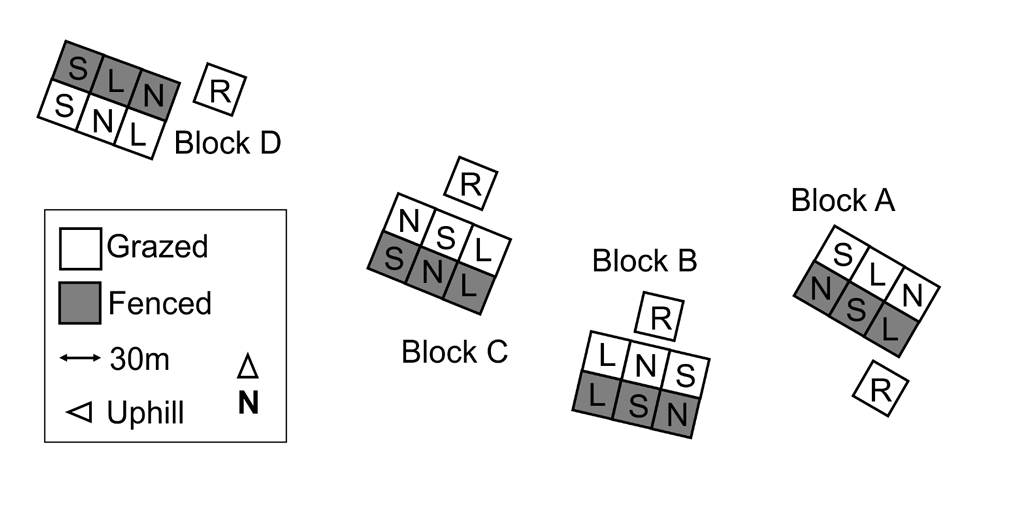
The sampling blocks at Hard Hill showing Layout of the Hard Hill experimental blocks and plots (R=reference, N=no burn since 1954, L=long (20-year) rotation, S=short (10-year) rotation.
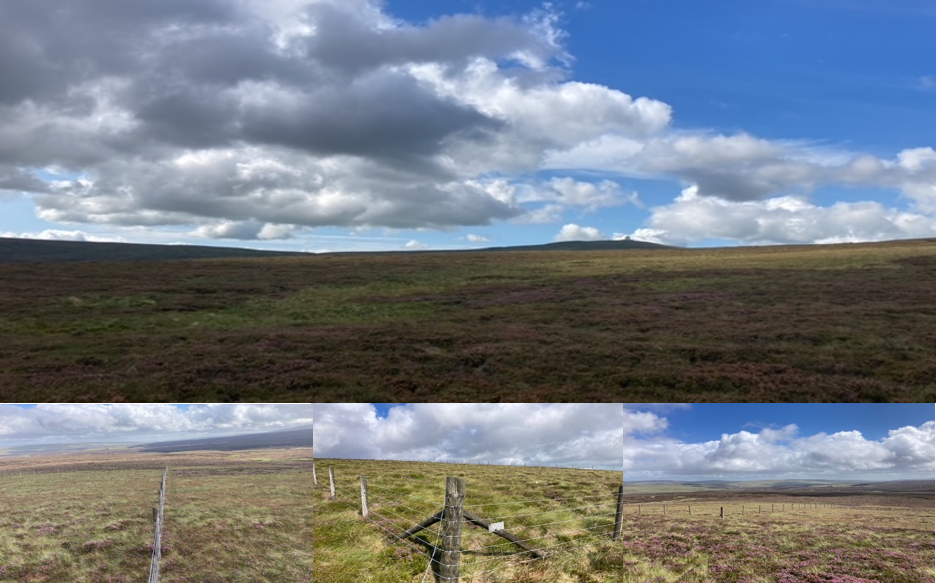
Photos of Hard Hill landscape and fenced monitoring plots. Credit: Adam Rodgers
The treatment plots will therefore remain the same. But instead monitoring will continue with no further burning treatments observed on Hard Hill. Fences to exclude grazing from some plots will remain though current grazing pressure is very light. The latest round of vegetation monitoring of the Hard Hill plots will be carried out in 2026/2027. In future, there is potential to monitor additional variables to study recovery trajectories, and Natural England would welcome ideas from the scientific community to improve the value of the already invaluable Hard Hill experiment.
In conclusion, Hard Hill has produced vital research on blanket bog habitat for over 70 years and has underpinned our scientific understanding of how land management choices affect these sensitive habitats. While the aims of the Hard Hill experiment may shift with the scientific and political landscape, the core experiment set up 72 years ago is enduring and will continue to provide answers to these complex questions into the future.
For further information on Moor House, see: Report describes the wealth of research undertaken over 70 years at Moor House National Nature Reserve | UK Environmental Change Network
