
Robin Buxton who has now stepped down from his ECT trustee role asks in his short piece How long does nature recovery take?
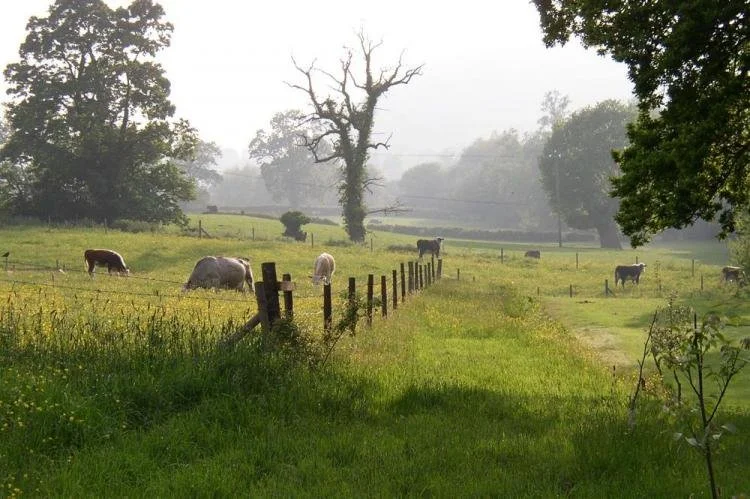
Field mushrooms Agaricus campestris appeared on my farm last year, the sixth year of my very-low-input, rotational, pasture-fed, cattle-grazed management (cattle now in their third year). This year there are many more patches of field mushrooms, and they seem bigger and more prolific, and just as tasty. The previous owner converted from arable to grass in 2009 but continued to use artificial fertilisers. The soils are extremely light, Thames floodplain sandy silts with little organic matter and little nutrient-binding capacity. From a nature recovery point of view, I’d argue that it is a prime site with better potential than “richer” soils.

RObin Buxton
So how long does nature recovery take? And if we want to be able to answer that question, how long must we continue to observe and ponder, whether by experiment or monitoring? Baseline data have huge value but are very difficult to fit into the work of setting up a new landholding. I am lucky to have robust records of house martin numbers from 70 years ago, when W.B. Alexander counted 504 nests underneath the Clifton Hampden bridge 300m from my land. We will never get that number back as we do not control all the pasture within foraging distance of the bridge, but I hope one day we will see a handful, feeding on a revived community of small Diptera emerging from our meadows. How long does it take to reach “one-day”?
I’m immensely proud of what we have achieved in the 18 years ECT has been growing. When we started there was little appetite for experiments that would take more than 3 years – and funders were deaf to any argument that long-term was important. We have established the case, but I step down from 18 years as a trustee of ECT when there is still a mountain to climb turning the case into reality. Can you imagine a time when NERC’s response to a grant application might be “how long do you think this experiment will need to run for to be really useful to conservation and farming?”
