Wales

ECT Media
Podcast with James Rowson
Read our blog on Cors Fochno by its former Principal Investigator, the late Richard Payne.
Webinar featuring Nina Overtoom “Cors Fochno Long-term Climate Change Experiment at 15 Years”
Overview
Cors Fochno, located north of Aberystwyth, is one of the most intact lowland raised bogs in England and Wales. Northern raised bogs are important stores of carbon, but the combined effects of climate change could turn these bogs into carbon sources.
Experiment start date: 2010
Habitat type: Peatbog
Experiment type: Climate
Site manager and owner: Justin Lyons, Natural Resources Wales
Experiment conducted by: Nina Overtoom (University of York) in collaboration with Dr Ben Keane (University of York), Prof James Moir (University of York), Dr Peter Levy (UKCEH), Justin Lyons (Natural Resources Wales), Dr Sylvia Toet (University of York), Prof Simon Caporn (Manchester Metropolitan University) and Prof Nancy Dise (UKCEH).
Experiment goal: To examine how drought and warming affects peatbogs
Stakeholders: UK Centre for Ecology & Hydrology, NERC Adapting to the Challenges of a Changing Environment, Natural Resources Wales.
ABOUT THE EXPERIMENT
-
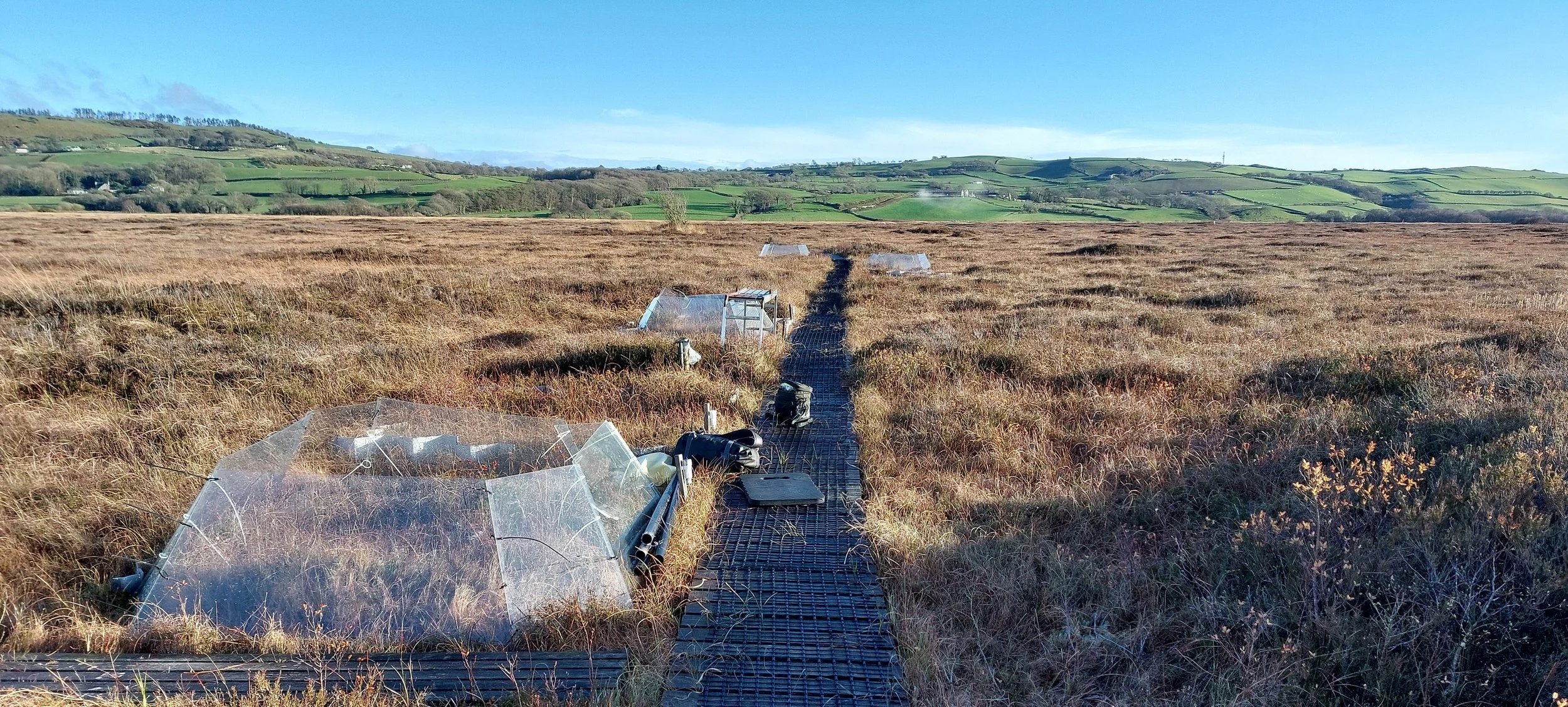
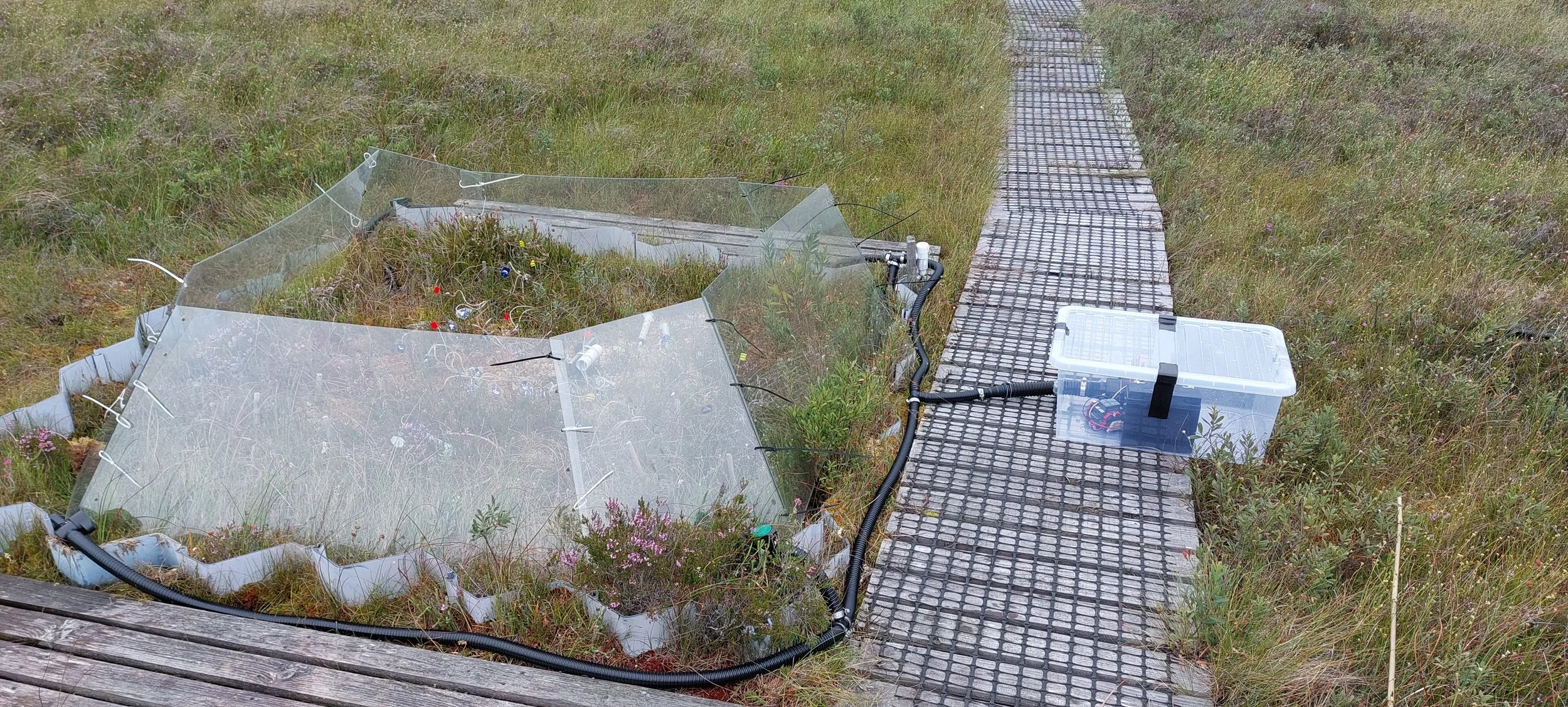
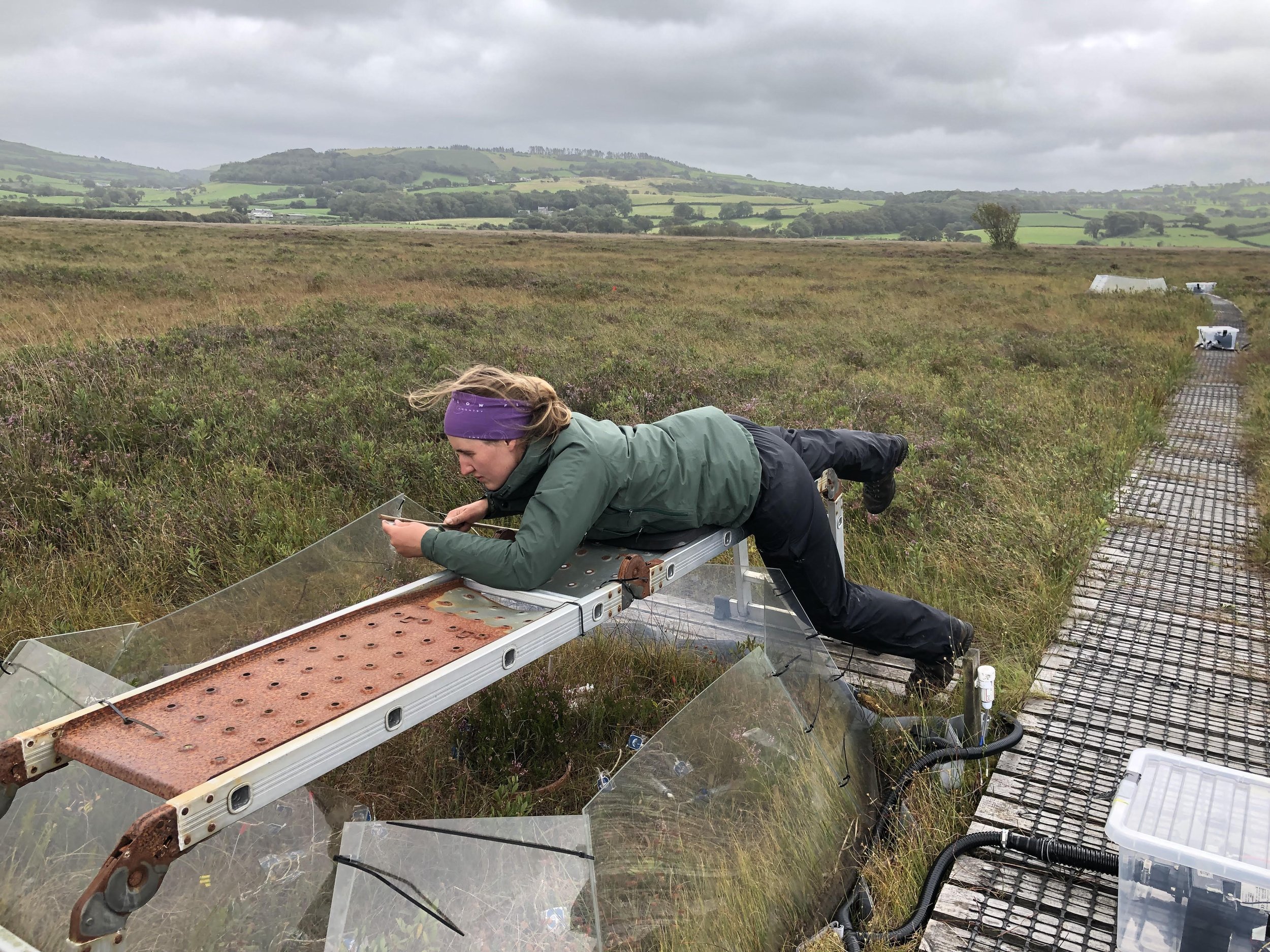
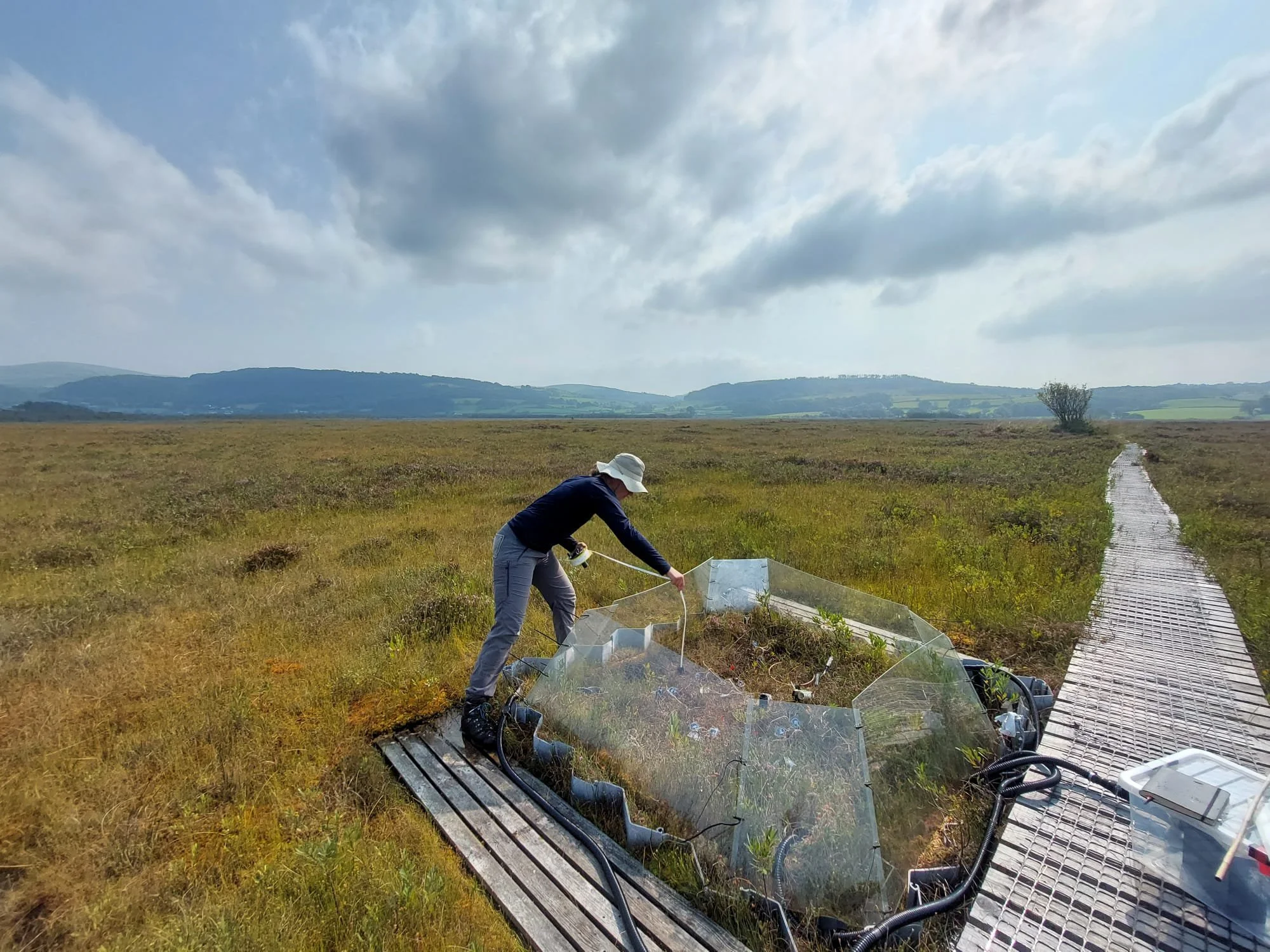
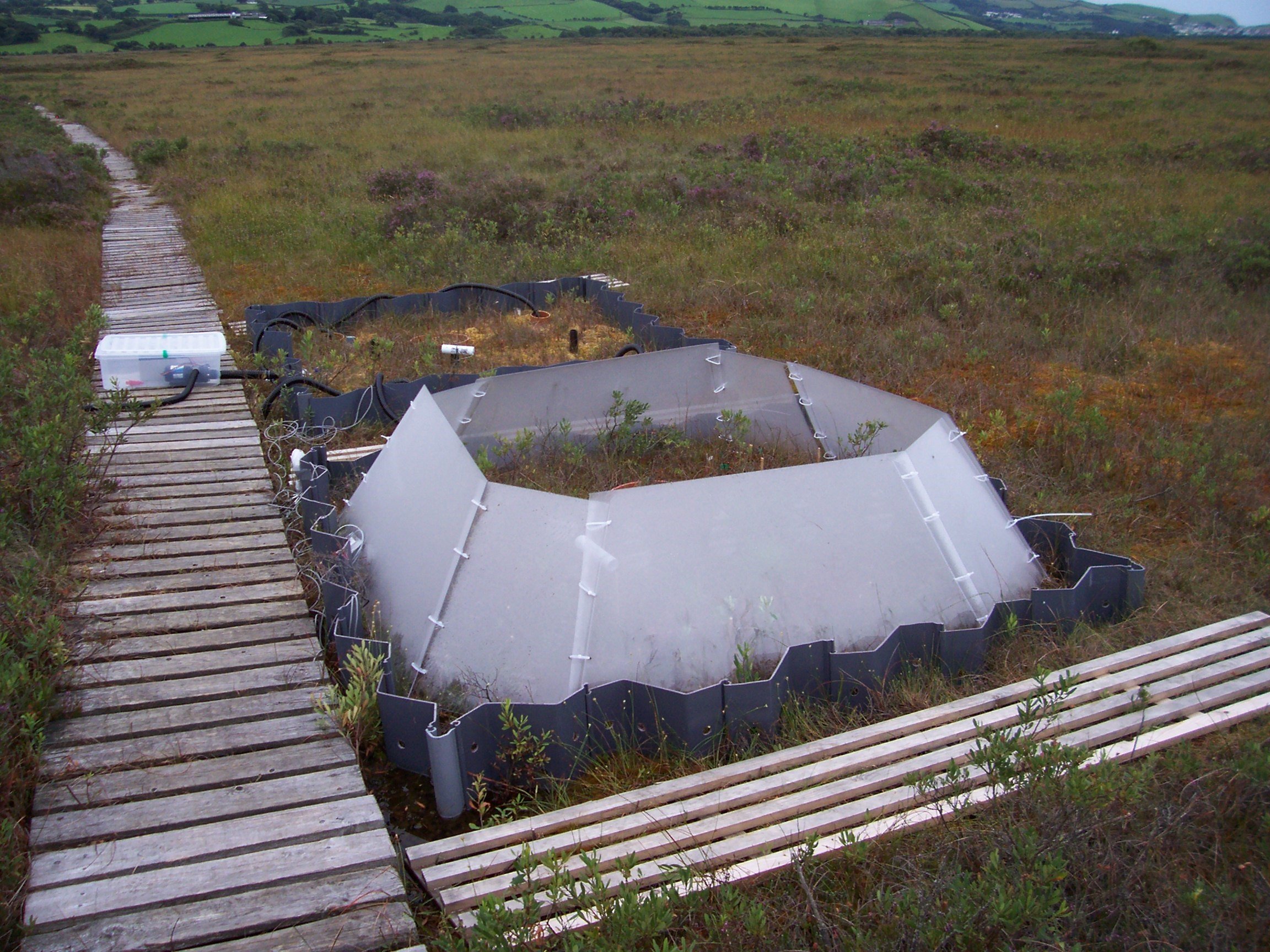
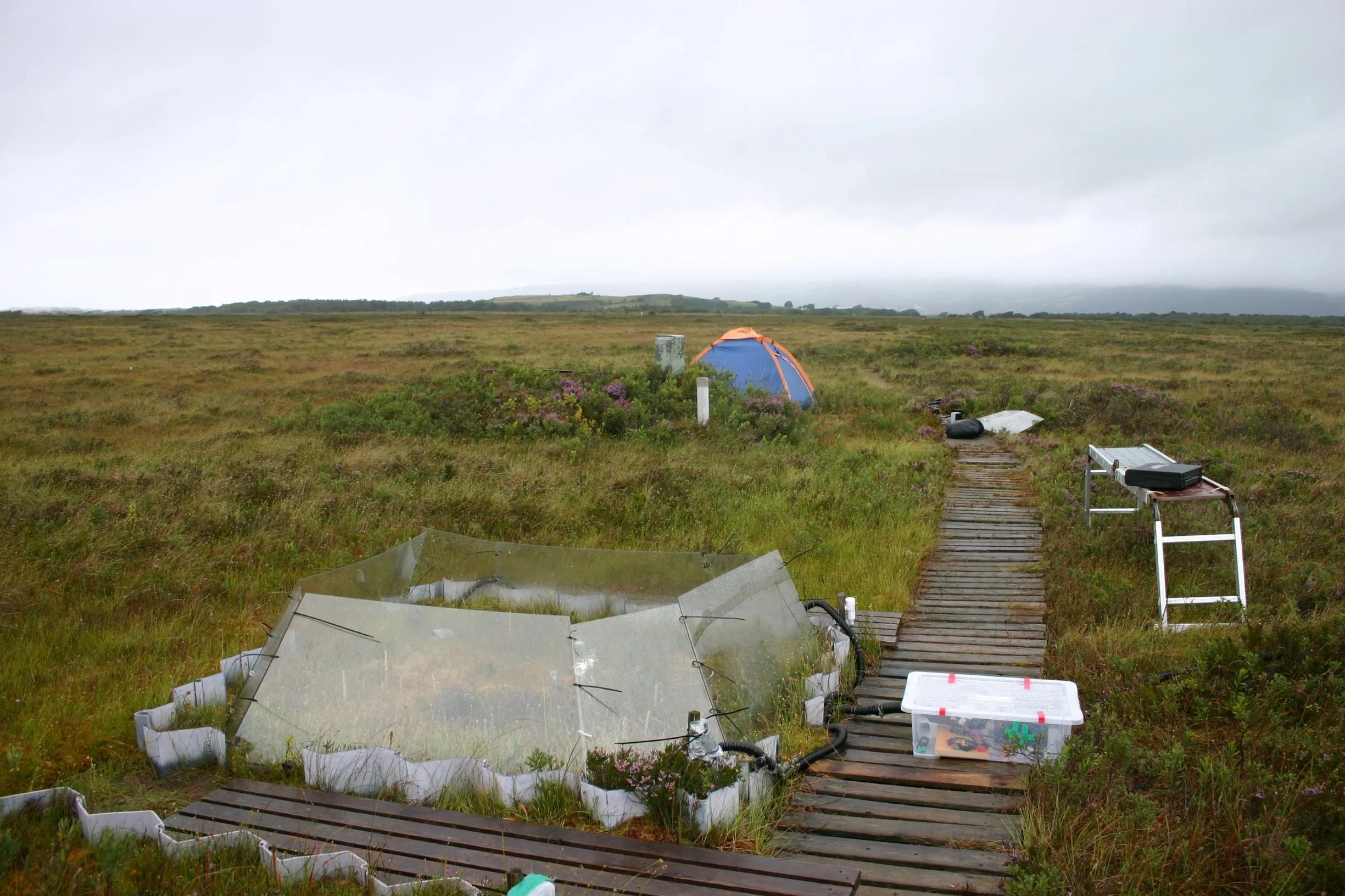
Established in 2010, the Cors Fochno experiment investigates peatland response to climate change, focusing on the combined impacts of drought and warming. Cors Fochno is the only experiment globally to include both long-term warming and active simulation of realistic summer drought by pumping water from the plots.
-
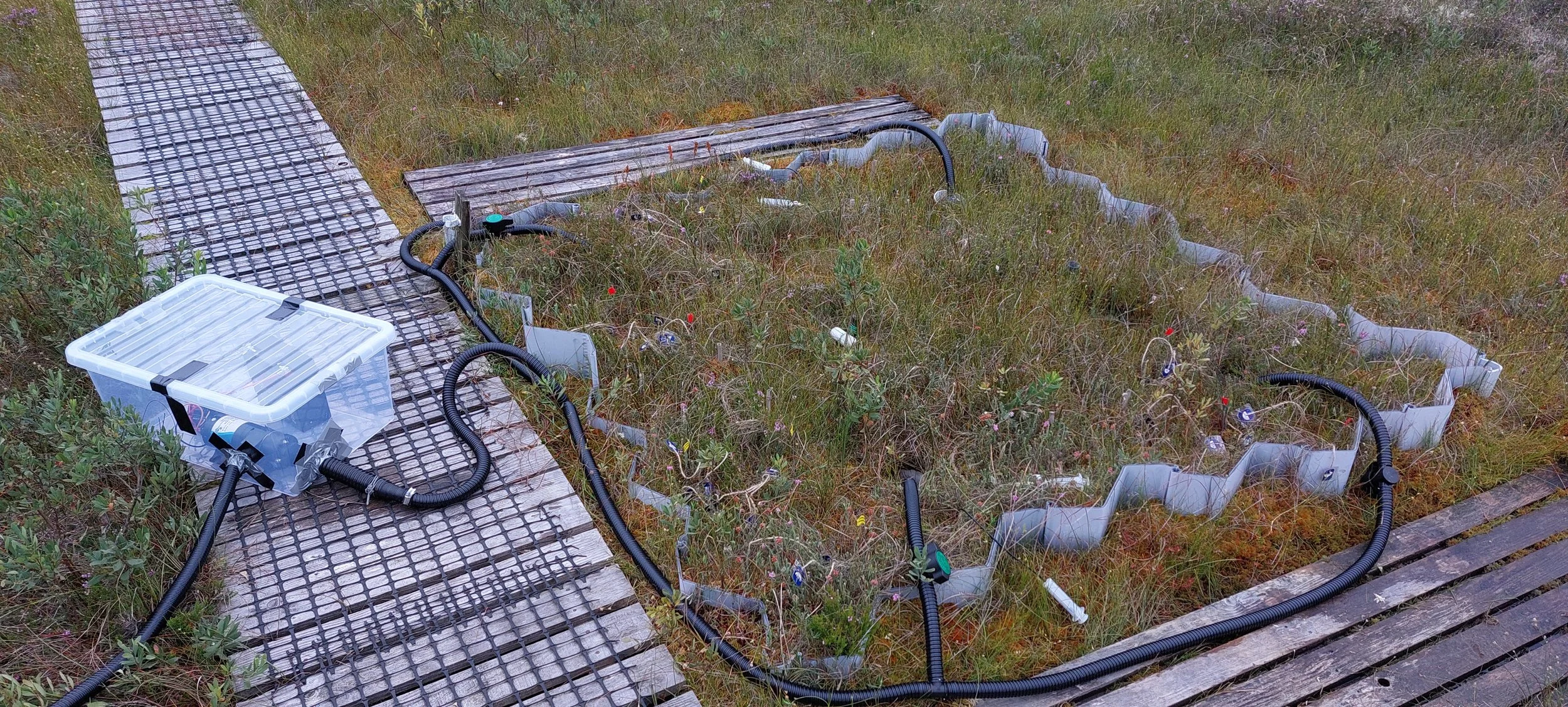
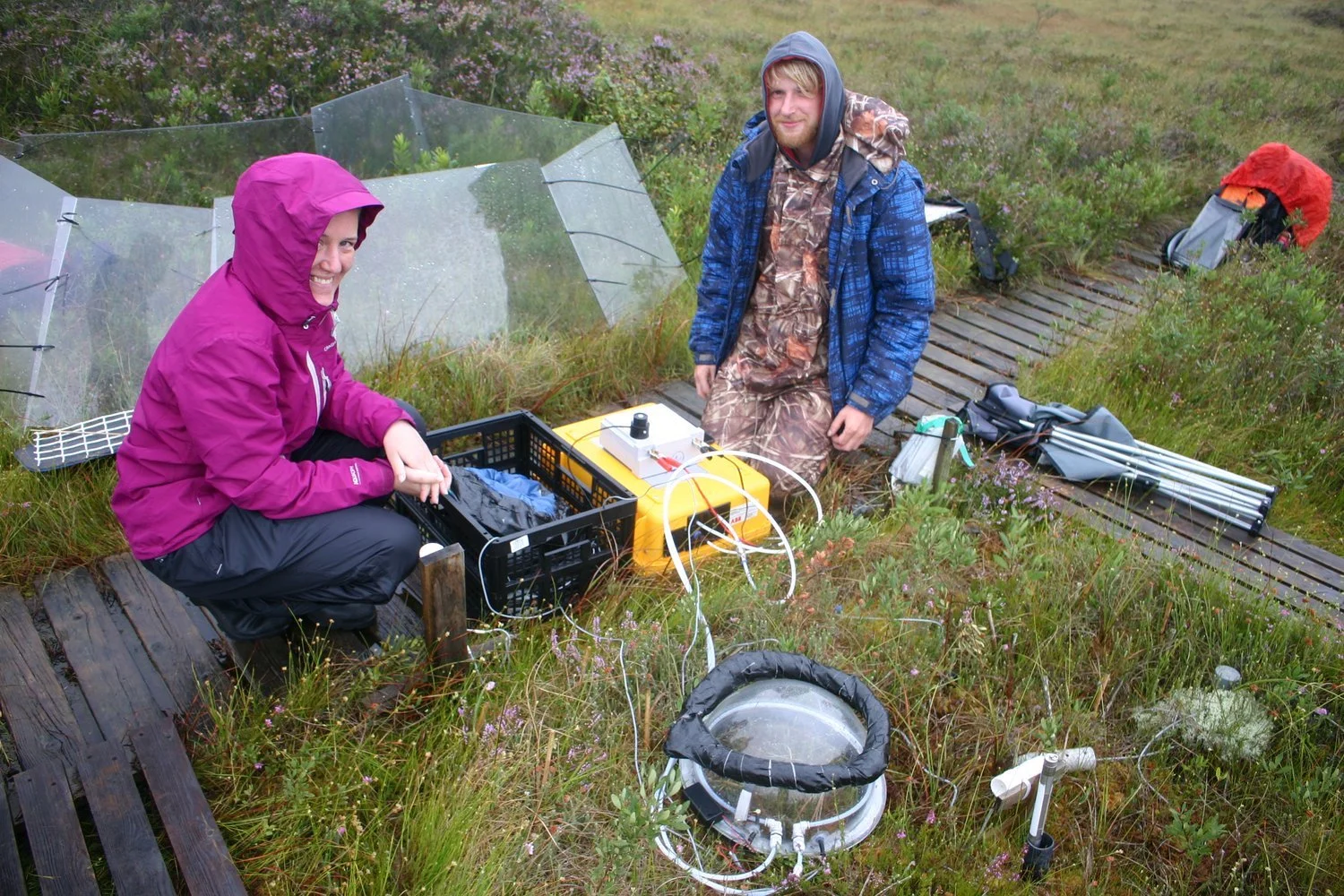
The experiment consists of crossed treatments of warming using open top chambers and periodic groundwater pumping. Passive warming chambers warm the peat surface whilst a month-long summer drought treatment is imposed in August every 4 to 5 years.
There are twelve climate change plots measuring 2 x 2m. The four treatments are replicated three times. Treatments are: 3 control plots, 3 summer drought plots, 3 passively-warmed plots, and 3 warmed and droughted plots.
-
Using this unique long-term climate change experiment, the effects of warming and drought on peatland functioning have now been measured for over 14 years. Andrews et al (2021) found a significant increase in shrub abundance under the warming treatments. A change in greenhouse gas emissions was demonstrated with a shift in net ecosystem exchange of CO₂ from an average net sink to a net source under combined warming and drought (Andrews, 2021). This raises questions about the source of these emissions and the underlying processes driving this shift.
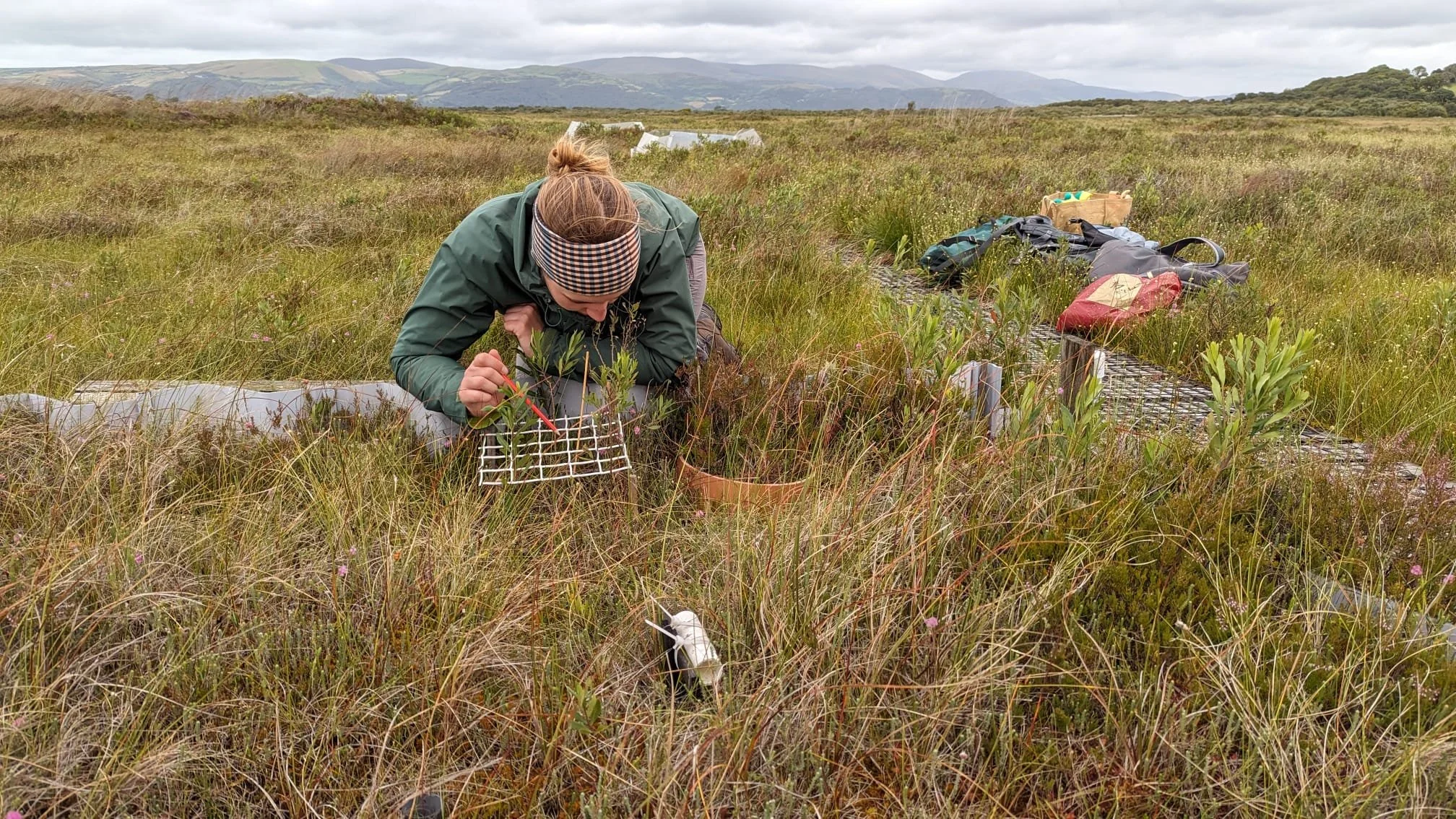
Since 2023, the research has moved from observing changes in peatland functioning to unravelling the underlying soil processes. By measuring soil microbial community functioning and environmental variables in combination with greenhouse gas emissions, the experiment aims to unravel the drivers of emitted CO₂. The focus lies on changes in plant-microbe interactions under long-term climate change and surrounding a summer drought.
-
Research Updates
View similar sites
-
-
BIFoR-FACE, Buxton, Colt Park Meadows, Culardoch, Clocaenog,
Hillsborough LTS, Llyn Brianne, Pwllpeiran, Tadham & Tealham Moor, Wytham (RainDrop) -
BangorDIVERSE, Clocaenog, Denmark Farm (Ceredigion), Elan Valley Meadows, Lady Park Wood, Llyn Brianne, Newborough Warren, Raisbeck & Pentwyn, Ruabon Moor, Pwllpeiran
